At this time I am studying our Torah, to be prepared for Shabbat. Its about Parasha WaJeze.
The parasha WaJeze is so named because Yaakov left Beersheba. There are different emphases in translations as to how WaJeze is to be understood. Personally, I prefer the interpretation of ‚approaching something‘. For me personally, it is the most important parasha in my life as a Jew.
Jacob goes to a place that the Torah only refers to indirectly… „and came to that place“. And yet everything is clear, as we will learn in the course of the further interpretation of the words of the Torah.
It is Jacob who leaves his familiar surroundings and takes one of the stones of the place for his head and lies down. It is a hard surface that Jacob chooses. On the one hand, this is his decision, and on the other hand, he does not make it easy for himself – quite deliberately.
Then he has his famous dream with the ladder reaching up to heaven. Messengers of G-d (plural) ascend and descend on it. These messengers are a clear indication of things to come. Then Jacob has a vision of G-d. G-d speaks to Jacob. Hashem promises him and his seed (i.e. descendants), that is, Israel as a whole. For Hashem says that all the clans of the earth will be blessed in him and spread out. Hashem clearly says, „I am with you, I will guard you wherever you go, and I will bring you back to this land, yes, I will not leave you until I have done what I have spoken to you.“
…
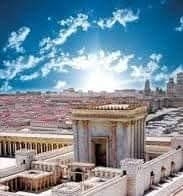
Which place does the Torah describe in this event? It is Mount Moriah, today’s Temple Mount! G-d is everywhere, but He does not reveal Himself everywhere.
When Jacob awakens, everything is strange to him, yet clear. He takes the stone on which his head rested and erects a monument with it, which he pours oil over. It is this symbolic act that sanctifies the profane and makes a decisive difference. He calls this place Bet-El, House of G-d. This refers to the Temple in Jerusalem.
Then he makes a vow. He formulates his words (in chapter 28, verse 20) not as a demand, but as a condition and logical prerequisite. …
But study and read every detail of the Parasha for yourself. I have always seen it as my duty never to lose my faith, even in exile. And I do not, because only in this way can I serve God and return to the house.
Shavua Tov.