Mazal Tov, Hendryk M. Broder!!!

Ich sende nachträglich meine besten Wünsche für eine herrausragende Persönlichkeit, wie Hendryk M. Broder. Mazal Tov nachträglich zum 80. Geburtstag. Ein Mann, der über seine eigene Jüdischkeit und Innenleben nie viel erzählt und darüber hinauswächst, um es möglich zu machen, Klartext zu reden und der bundesdeutschen Gesellschaft den Spiegel vorzuhalten – dabei nie vergisst, wer die Feinde von Demokratie und Freiheit sind. Er vergisst dabei nicht uns Juden zu adressieren und motiviert uns mutiger zu sein und wehrhaft unseren gesellschaftlichen Beitrag auch weiterhin nach Außen zu tragen. Es gibt nichts schlimmeres als ein passiver Jude, der verängstigt sich auf „das Religiöse“ beschränkt.

Alles Gute!!!

Election in Israel

In these times of uncertainty for Israel: Will Eisenkot sacrifice national unity on the altar of an Arab state for the so-called Palestinians?!! Will Eisenkot completely devalue all the sacrifices made thus far for national unity?!! And will Eisenkot plunge Israel into its greatest crisis by disregarding the will of Hashem?!! This must be clarified before the election, for the voter’s responsibility has never been greater than it is now—and a military prime minister alone will not save Israel!

Awraham is a Jew and lived in Kanaan

Decoding the news: „Ben Gvir strips the Waqf foundation of authority over the Cave of the Patriarchs“

We need to distinguish between two things currently circulating simultaneously:

  1. What actually happened at the Cave of the Patriarchs?

According to reports from about two months ago, it was not Ben Gvir personally who revoked the Waqf foundation’s authority, but the Israeli government under Finance Minister Bezalel Smotrich:

  • Announcement: Israel has stripped the Palestinian Authority of its powers regarding planning and construction at the Cave of the Patriarchs in Hebron.
  • Legal basis: This revokes an agreement from the 1990s. Under the 1997 Hebron Protocol, the Palestinians held control over planning and construction in the city, including the site of the Cave.
  • Smotrich’s stated goal: to strengthen Israeli sovereignty in the West Bank. He called it a „historic step.“

Reactions:

  • The Palestinian Authority condemns an „attack on the political and legal status of Hebron“ and a violation of international law.
  • The Arab Inter-Parliamentary Union condemned a „project to Judaize“ the shrine and the transfer of administration from the Palestinian Ministry of Religious Affairs to Israel.

The idea of ​​“returning control to Jewish hands“ stems from this resumption of administrative authority at the site, as well as from the political rhetoric of far-right ministers linking the move to sovereignty. 🇮🇱

  1. Analysis: Why is this site of central importance?

The Cave of the Patriarchs = Me’arat HaMachpelah for Jews, Ibrahimi Mosque for Muslims; located in Hebron.

Today, the building is divided: three-fifths serve as a synagogue in the northwest, and two-fifths as a mosque in the southeast. Consequently, the planned transfer by 2025 is perceived by Israel as a further step toward direct Israeli civil control, and by the Palestinians as de facto annexation.

Israel’s right to control the West Bank—captured in 1967—is not internationally recognized.

  1. Abraham’s purchase of the tomb according to the Torah

The relevant account is found in Genesis 23.

Summary:

  1. Context: Sarah dies in Hebron/Kiryat Arba.
  2. Purchase: Abraham negotiates with Ephron the Hittite. He wishes to buy the Cave of Machpelah to bury Sarah there.
  3. Price: 400 shekels of silver. Ephron offers to give the tomb away for free, but Abraham insists on paying the full price. The biblical text presents this as a legitimate purchase made in the presence of witnesses „before the sons of Heth.“
  4. Significance: This is Abraham’s first purchase of land in the Land of Canaan. In Jewish tradition, it establishes a legal and ancestral connection to the land.

Following Sarah, Abraham, Isaac, Rebekah, Jacob, and Leah are buried there—hence the name „Tomb of the Patriarchs and Matriarchs.“

In Muslim tradition, it is also the burial site of Ibrahim, Sarah, Ishaq, Yaqub, etc.—hence the name Ibrahimi Mosque.


In summary:

  • There was no decree titled „Ben Gvir strips the Waqf foundation of authority.“ The measure from June 2025 concerns the transfer of planning authority for the site in Hebron from the Palestinian Authority to Israel—a move advocated by Smotrich.

Politically, the current government presents this as an affirmation of sovereignty over a site regarded as a biblical cradle. It is condemned internationally and within the Palestinian community as a process of Judaization and a violation of agreements.

The site is claimed by both religious traditions, based on the story of Abraham purchasing the cave from Ephron for Sarah.

Muslims are viewed as usurpers of this Jewish site.

Short Thoughts about roots of Islamic Antisemitism

I have been reflecting on the reasons behind Islamic Antisemitism.

On the surface, it manifests as violence directed against anything that refuses to submit to the yoke of Islam.

At an internal level, it stems from the humiliation of unfulfilled delusions of grandeur—frustrations that prevent the release of testosterone-driven urges. There is no other way to explain the specific, systematic rape of women belonging to other religions.

Moreover, Islam explicitly commands and encourages the use of sexuality as a weapon of subjugation and destruction.

Consult the instructions and scriptures of the Quran to learn more.

Die EU vertuscht und mauert…

Von 2006 bis 2023 erhielten die ‚Palästinenser’ von der EU knapp 6 Milliarden (!) Euro.
Ob mit diesem Geld auch die Waffen gekauft wurden, mit denen man die Opfer des 7. Oktober massakriert hat, kann leider nicht aufgeklärt werden, da die Herausgabe der Akten für die EU Kommission einen ‚zu großen Verwaltungsakt‘ darstellen würde.

EUmustGO #Dexit

Die Ursprünge des Namens „Palestina“

Die Ursprünge des Namens „Palästina“ entdeckte ich zuerst bei Loahnah Heike Wiederkehr – einer Gerechten.


Einer der Begriffe, der in Ihren morgendlichen Nachrichten am häufigsten vorkommt, ist „Palästina“. Aber was bedeutet er eigentlich? Woher stammt dieser Name? Werfen wir einen Blick in die Geschichte.

Die Bibel erzählt viele Geschichten von Kriegen zwischen den Israeliten und den Philistern, einem Volk von Eindringlingen (von der hebräischen Wurzel PLSH, was „eindringen“ bedeutet). Die Philister waren griechischen Ursprungs, wahrscheinlich aus dem Ägäischen Meer. Die Heilige Schrift beschreibt sie als Seefahrer, die sich entlang der Südküste des alten Israel in Städten wie Gaza, Aschkelon, Aschdod, Ekron und Gat niederließen.

Sie waren die erbitterten Feinde Israels und befanden sich ständig im Krieg mit den Hebräern (ein bekannter Kampf ist der zwischen Simson und Delila; Delila war eine Philisterin). Ihre Geschichte endet im Jahr 604 v. Chr., als sie von den Neobabyloniern vollständig vernichtet werden, nachdem sie bereits im Jahr 1000 v. Chr. durch König David geschwächt worden waren. Danach verschwinden die Philister aus der Geschichte. Es sind keine Spuren ihres Volkes, ihrer Kultur oder ihrer Sprache erhalten geblieben.

700 Jahre später, während des Römischen Reiches, führt der jüdische Anführer Bar Kochba einen heldenhaften Aufstand gegen die römische Herrschaft an und scheitert tragischerweise. Um die Verbindung der Juden zu diesem Land auszulöschen, benennen die Römer „Judea“ in „Syria Palaestina“ um und beschwören damit bewusst die Erinnerung an Israels alte Feinde, die Philister, herauf. Sie vertreiben den Großteil der jüdischen Bevölkerung und zerstören Jerusalem.

Der Name „Palästina“ bleibt bestehen und taucht in den nächsten 1.800 Jahren auf Karten auf, jedoch nur als geografische Bezeichnung, niemals als Name einer Nation oder eines Volkes.

Im Laufe der Jahrhunderte bleibt das Land dünn besiedelt und weitgehend öde und wechselt von einem Reich zum nächsten: Byzantinisches, Arabisches, Mamluken- und Osmanisches Reich. Im Jahr 1869 besuchte Mark Twain das Land und beschrieb, was er sah:

„Ein ödes Land, dessen Boden zwar fruchtbar genug ist, aber gänzlich dem Unkraut überlassen ist … Wir sahen auf der gesamten Strecke keinen einzigen Menschen … Es gab kaum einen Baum oder Strauch.“

Im 19. Jahrhundert war die Bevölkerung der Region klein und gemischt: Juden, Christen, Beduinenstämme und arabischsprachige Dorfbewohner, die sich nicht als „Palästinenser“, sondern als Syrer oder einfach als Araber unter osmanischer Herrschaft identifizierten. Der Begriff „Palästina“ wurde von europäischen Kartographen verwendet, nicht von den Einheimischen.

Unter der frühen islamischen Herrschaft wurde die Al-Aqsa-Moschee auf den Ruinen des jüdischen Tempels errichtet, als Symbol für die islamische Eroberung und die Ablösung der jüdischen Verbindung zu diesem Ort. Doch das jüdische Leben verschwand nie. Über die Jahrhunderte hinweg bestanden Gemeinden in Jerusalem, Hebron, Safed und Tiberias fort.

Wer sind also die modernen „Palästinenser“? Als die zionistische Bewegung Ende des 19. Jahrhunderts begann, kehrten Juden aus aller Welt in ihre alte Heimat zurück, erwarben legal Land, legten Sümpfe trocken und belebten die Landwirtschaft wieder. Dies brachte wirtschaftliche Chancen mit sich, und arabische Migranten aus den umliegenden Regionen – Ägypten, Syrien, dem Libanon und Transjordanien – zogen auf der Suche nach Arbeit in das Gebiet.

Die Briten, die nach dem Ersten Weltkrieg die Kontrolle übernahmen, bezeichneten alle Menschen in der Region, Juden wie Araber, als „Palästinenser“. Tatsächlich waren die „Palestine Post“ (die heutige Jerusalem Post) und das Palestine Philharmonic Orchestra jüdische Institutionen.

Erst nach der Gründung des Staates Israel im Jahr 1948 und der arabischen Niederlage (als sie das Land verloren und zu Flüchtlingen wurden) begannen lokale arabische Führer, sich selbst als „Palästinenser“ zu bezeichnen, und übernahmen damit den römischen Namen, mit dem einst das jüdische Volk verspottet worden war.

Was einst eine römische Beleidigung war, wurde zu einer modernen politischen Identität, die erst Mitte des 20. Jahrhunderts entstand.

English Translation:

The Origins of the Name „Palestine“
One of the terms that appears most frequently in your morning news is „Palestine.“ But what does it actually mean? Where does this name come from? Let’s take a look at history.

The Bible recounts many stories of wars between the Israelites and the Philistines—a people of invaders (from the Hebrew root PLSH, meaning „to invade“). The Philistines were of Greek origin, likely hailing from the Aegean Sea. Scripture describes them as seafarers who settled along the southern coast of ancient Israel in cities such as Gaza, Ashkelon, Ashdod, Ekron, and Gath.

They were Israel’s bitter enemies and were constantly at war with the Hebrews (a well-known conflict is that between Samson and Delilah; Delilah was a Philistine). Their history comes to an end in 604 BC, when they were completely annihilated by the Neo-Babylonians—having already been weakened by King David around 1000 BC. Thereafter, the Philistines vanish from history. No traces of their people, their culture, or their language have survived.

Seven hundred years later, during the era of the Roman Empire, the Jewish leader Bar Kokhba led a heroic uprising against Roman rule—which, tragically, ended in failure. In an effort to obliterate the Jews‘ connection to this land, the Romans renamed „Judea“ to „Syria Palaestina,“ thereby deliberately invoking the memory of Israel’s ancient enemies: the Philistines. They expelled the majority of the Jewish population and destroyed Jerusalem.

The name „Palestine“ endured, appearing on maps over the next 1,800 years—yet solely as a geographical designation, never as the name of a nation or a people. Over the centuries, the land remained sparsely populated and largely desolate, passing from one empire to the next: the Byzantine, Arab, Mamluk, and Ottoman Empires. In 1869, Mark Twain visited the land and described what he saw:

“A desolate country, whose soil is rich enough, but is entirely given over to weeds… We saw not a single human being on the whole route… There was hardly a tree or a shrub.”

In the 19th century, the region’s population was small and mixed: Jews, Christians, Bedouin tribes, and Arabic-speaking villagers who identified themselves not as “Palestinians,” but as Syrians or simply as Arabs under Ottoman rule. The term “Palestine” was used by European cartographers, not by the local inhabitants.

Under early Islamic rule, the Al-Aqsa Mosque was built upon the ruins of the Jewish Temple as a symbol of the Islamic conquest and the superseding of the Jewish connection to the site. Yet, Jewish life never vanished. Throughout the centuries, communities persisted in Jerusalem, Hebron, Safed, and Tiberias.

Who, then, are the modern “Palestinians”? When the Zionist movement began in the late 19th century, Jews from all over the world returned to their ancient homeland, legally acquired land, drained swamps, and revitalized agriculture. This brought with it economic opportunities, and Arab migrants from surrounding regions—Egypt, Syria, Lebanon, and Transjordan—moved into the area in search of work.

The British, who assumed control after World War I, referred to all people in the region—Jews and Arabs alike—as “Palestinians.” Indeed, the Palestine Post (today the Jerusalem Post) and the Palestine Philharmonic Orchestra were Jewish institutions. It was only after the founding of the State of Israel in 1948 and the Arab defeat—when they lost the land and became refugees—that local Arab leaders began to refer to themselves as „Palestinians,“ thereby adopting the Roman name that had once been used to mock the Jewish people.

What was once a Roman insult evolved into a modern political identity that emerged only in the mid-20th century.


.

Jerushalajim!

At this moment, I am thinking of Yerushalayim and Jerusalem Day, which is being observed this evening and tomorrow.

It celebrates the recapture of Jerusalem—its liberation, its reunification, and the vibrant religious life available to all Jews and all other people who have committed themselves to three things:

Truth, Justice,
and Peace.

Jerusalem is uniquely blessed by Hashem, the God of Israel; it is a place where we all belong—at least once in our lives.

It is the City of God—not merely the deity of some church or a desert demon—but a truly holy city.

Therefore, it is Israel alone that guarantees that all monotheists of this world may—and indeed have the right to—find their spiritual center here.

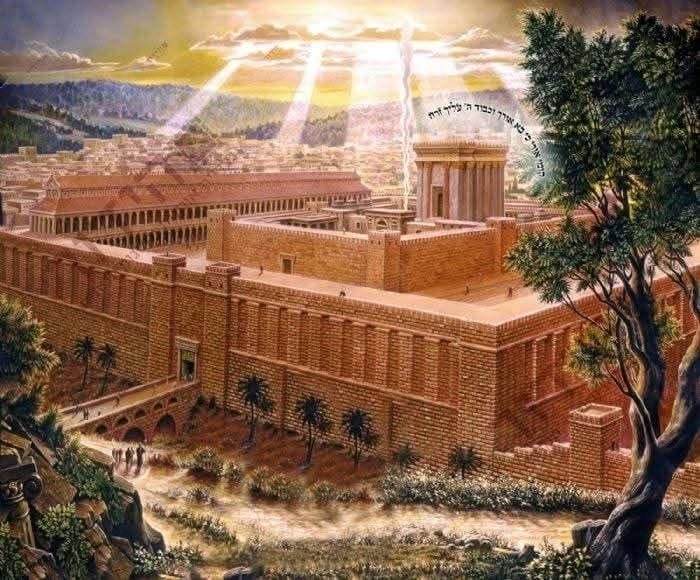
Once the Third Temple has been fully rebuilt—and this will come to pass sooner than many fear or oppose—then all offerings will be brought in the proper place for the sake of the world, and the world will come to understand why this is the will of Hashem.

Important Warning!

From the Israeli Embassy:

Please share this with your Jewish networks. The Israeli Embassy has asked us to share the following message with the community:

Dear friends,

Right now, a website is circulating that claims to help Jews living abroad:

This website collects information about Jewish and Israeli families abroad and invites people to „host Jews and Israelis.“

There is a serious suspicion that this site is operated by hostile entities seeking to identify and harm Jewish and Israeli families.

Under no circumstances should you provide personal information on this website!

Stay away and spread this message: do not use this site and rely only on official channels of the Israeli government, the Ministry of Foreign Affairs, and its embassies. In case of urgency or emergency, you can contact the Ministry of Foreign Affairs‘ 24-hour Situation Room:

  • Telephone: +972-2-5303155
  • Fax: +972-2-5303896
  • Email: matzav@mfa.gov.il

Please forward this message; it could save lives.

Thinking about Islamism, the Left and us

Right now, I’m thinking that the greatest danger to Europe comes from Islamism and its leftist henchmen. The left is all too happy to be harnessed to the cart of Muslim terror, dreaming of collapse. So let’s talk about something else. About values. Anyone who abandons Western values ​​and fights against them—like the left and Islam in the 21st century—Amsterdam is just the tip of the iceberg—shouldn’t be surprised when war is declared on all their representatives. I am doing just that. As long as violence is condoned, trivialized, and spread, any dialogue is impossible and doomed to failure. That’s precisely why Judaism in Europe must take intensive care of its security and, consequently, embrace monotheism.

Controlling, Surpression, Criminalization as tool to kill you

The worst thing that can happen to you are three things:

The constant surveillance of free speech by government agencies, European institutions, and corporations.

When Western representatives systematically delegitimize, prevent, and criminalize the undermining of free speech, then they are not my representatives, but rather representatives of an Orwellian campaign that seeks to disenfranchise and silence citizens, thereby rendering our democracy absurd.

(Marcus Günther, Michael Gundlach)