
Today we find ourselves in the week in which a new book of the Torah will be read this coming Shabbat. It is the book of Devarim. Devarim means retrospective and recalls everything that has happened and what is and remains of utmost importance. We are also speaking of the Mishneh Torah, the repetition of the Torah. With the words of Devarim, we all enter this important phase of our own personal development, and at the same time, we, as a Jewish people, are called upon and prepared to confront the contents of the Torah once again and move forward with it. Devarim also marks the beginning of Yeshayahu’s vision and the Book of the Prophets. The parashah begins right at the beginning: „These are the words that Moses spoke to all Israel in the wilderness, opposite Suf, between Paran and between Tophel and Laban and Hatzeroth and Di-Zahab.“ Then comes a remarkable sentence in the second pasuk. It speaks of eleven days‘ journey from Choreb on the way to Se’ir to Kadesh Barnea. Se’ir refers to Edom, and this is important. The concluding remark is that it was the fortieth year, in the eleventh month of the moon, on the first day of the moon, that Moses spoke to the sons of Israel. According to rabbinic reckoning, the eleventh month is the month of Av, and we will find ourselves in this very month next Shabbat Chazon. It is important to study every word of the Torah and realize that, on the one hand, we have the task of taking possession of the land given to the Jewish people by the Canaanites, but, on the other hand, to consider that it is Hashem alone who makes all this possible, and our inner predispositions that enable the realization of what Hashem has planned for us all.
Autor: Marcus Gundlach
Blogger (marcusgundlac12) and Poet, jewish, early-retired Socialworker
Macron’s Dreamtheater
Text: Avi Grin
Der französische Botschafter in Israel besuchte die Muqataa in Ramallah und überreichte Mahmud Abbas eine Verpflichtungserklärung zur Gründung eines palästinensischen Staates.
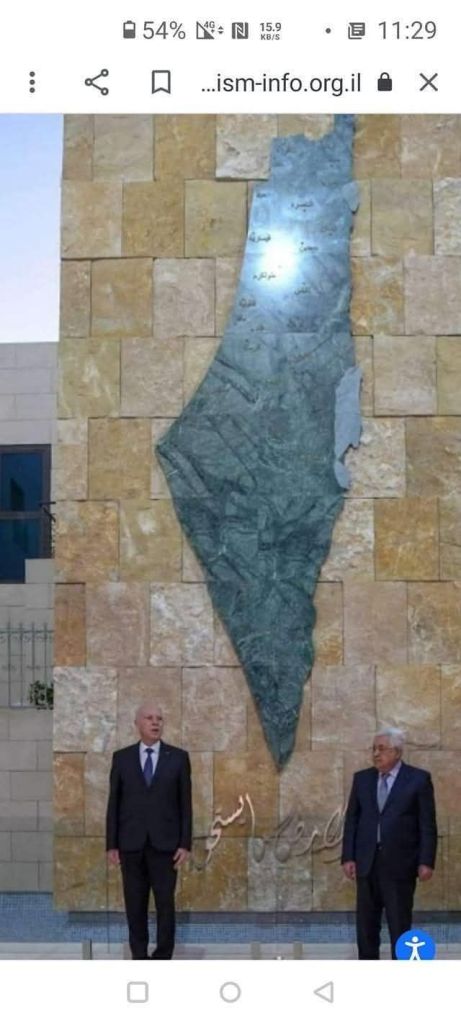
Was sicher ist: Der französische Botschafter konnte auf den Fotos die Karten von „Palästina“ sehen, die an den Wänden jedes Raumes und jeder Halle in der Muqataa hängen.
Das ist die einzige Karte, die sie besitzen –
in Schulbüchern, auf öffentlichen Plätzen in arabischen Städten in Judäa und Samaria, in jeder diplomatischen Vertretung der palästinensischen Autonomiebehörde, die Israel ihnen überhaupt erst ermöglicht hat.
Der einzige Staat, der ihnen je irgendeine Form von Unabhängigkeit gegeben hat, ist der Staat Israel.
Es gibt keinen Führer dieses erfundenen Volkes – eines Volkes mit einem lächerlichen Namen, der nicht einmal wirklich arabisch klingt – „die Palästinenser“ –
der sich vor seiner gesamten Diaspora hinstellen und sagen könnte:
„Nie wieder werden wir nach Haifa, Jaffa, Akko, Safed, Lod, Nazareth oder Zippori zurückkehren.
Wir werden in einem Zwergstaat leben, den die israelische Linke und Macron uns im Westjordanland und Gaza anbieten.
Wir werden auf ‚Palästina vom Fluss bis zum Meer‘ verzichten.
Wir werden in Frieden leben, Seite an Seite mit Israel.
Unser großes Volk – das größtenteils in der Diaspora lebt – wird sich mit diesem kleinen Zwergstaat zufriedengeben.“
Dabei handelt es sich um ein Gebiet, das bis 1967 unter arabischer Kontrolle stand –
doch kein einziger arabischer Führer träumte jemals davon, den Palästinensern dort einen Staat zu geben.
Die Arabische Liga hat niemals ihr „Recht“ auf einen Staat anerkannt – weder in Jordanien noch in Ägypten.
Keine einzige arabische Nation sah in den Palästinensern ein unabhängiges Volk mit Anspruch auf ein eigenes Staatsgebiet.
Die Palästinenser waren ein Vorwand, um den arabisch-israelischen Konflikt aufrechtzuerhalten, dessen Ziel die Zerstörung Israels war.
Jerusalem war zu keinem Zeitpunkt der Geschichte Hauptstadt eines arabischen Staates.
Für uns Juden gab es niemals eine andere Hauptstadt als Jerusalem.
Und doch will Macron den Arabern Ostjerusalem geben. 🤔
Das wird ihm nicht helfen.
Paris wird islamisch – ob er Palästina anerkennt oder nicht.
Text :Tamir Morag
Ein bisschen Perspektive – angesichts der Hysterie rund um die französische Anerkennung eines „palästinensischen Staates“, der in Wirklichkeit gar nicht existiert:
Schon lange vor dem dramaliebenden und heuchlerischen Macron haben etwa 139 von 193 UN-Mitgliedsstaaten (also über 70 %) den „palästinensischen Staat“ anerkannt – darunter auch einige westliche Länder wie Spanien, Irland, Norwegen und andere.
Was hat das den Palästinensern gebracht? Unklar.
Macron ist gelangweilt, weil er innenpolitisch gelähmt ist und nichts bewegen kann – also sucht er sich Abenteuer im Ausland und drückt uns diesen Baguette ins Gesicht.
Der Sturm wird vorübergehen – und die Realität wird sich nicht ändern, so wie sie sich auch bisher nicht geändert hat, obwohl die Mehrheit der Staaten weltweit diesen imaginären Staat längst anerkannt hat.
—–
Text: Avi Grin
The French ambassador to Israel visited the Muqataa in Ramallah and presented Mahmoud Abbas with a declaration of commitment to the establishment of a Palestinian state.
What is certain is that the French ambassador could see in the photos the maps of „Palestine“ hanging on the walls of every room and hall in the Muqataa.
This is the only map they have – in schoolbooks, in public squares in Arab towns in Judea and Samaria, in every diplomatic mission of the Palestinian Authority, which Israel made possible in the first place.
The only state that has ever given them any form of independence is the State of Israel.
There is no leader of this fictitious people—a people with a ridiculous name that doesn’t even sound particularly Arabic—“the Palestinians“—who could stand before their entire diaspora and say:
„Never again will we return to Haifa, Jaffa, Acre, Safed, Lod, Nazareth, or Zippori.
We will live in a dwarf state that the Israeli left and Macron are offering us in the West Bank and Gaza.
We will renounce ‚Palestine from the River to the Sea.‘
We will live in peace, side by side with Israel.
Our great people—most of whom live in the diaspora—will be content with this small dwarf state.“
This is territory that was under Arab control until 1967—yet not a single Arab leader ever dreamed of giving the Palestinians a state there.
The Arab League has never recognized their „right“ to a state—neither in Jordan nor in Egypt.
No Arab nation saw the Palestinians as an independent people entitled to their own territory.
The Palestinians were a pretext for perpetuating the Arab-Israeli conflict, whose goal was the destruction of Israel.
Jerusalem has never been the capital of an Arab state at any point in history.
For us Jews, there has never been a capital other than Jerusalem.
And yet Macron wants to give East Jerusalem to the Arabs. 🤔
That won’t help him.
Paris is becoming Islamic – whether he recognizes Palestine or not.
Text: Tamir Morag
A bit of perspective – in light of the hysteria surrounding the French recognition of a „Palestinian state“ that doesn’t actually exist:
Long before the drama-loving and hypocritical Macron, approximately 139 of 193 UN member states (over 70%) recognized the „Palestinian state“ – including some Western countries like Spain, Ireland, Norway, and others.
What has this done for the Palestinians? Unclear.
Macron is bored because he is paralyzed domestically and can’t get anything done – so he seeks adventures abroad and shoves this baguette in our faces.
The storm will pass – and reality will not change, just as it has not changed so far, even though the majority of countries worldwide have long since recognized this imaginary state.
Thoughts at Matot-Maseij…
Today I began to study Parasha Matot. Its name centrally refers to the tribes of Israel and is the last parasha to be read together with Parasha Maseij in the Sefer Bemidbar. Therefore, next Shabbat, we will soon reach a new stage in the development of the Children of Israel. At the very beginning, it speaks of vows and how to deal with them. Then the text continues with the war against the Midianites. Following a request from the tribes of Reuven and Gad, Moshe, in view of their extremely numerous herds of cattle, allocates the vast plains of Transjordan. However, he obligates them to participate in the conquest of Canaan alongside his brothers. It is the emphasis on a shared goal and the importance of all brothers standing together that deeply impresses me and is very important. After a quick recap of the stages of their journey through the desert, the Children of Israel learn from Moshe the course of the land’s borders, which they must observe. The Lord then appoints those responsible, who will assist the High Priest Eleazar and Joshua, as the leader of the people, in distributing the land. The Levite cities are then designated and given to the Levites. Furthermore, an unintentional murderer can seek refuge in them from the archaic desire for revenge among the victim’s relatives.
Eine Zeit der Trauer, eine Zeit der Hoffnung
Es ist nicht allein ausreichend die zweimalige Zerstörung des Tempels in Jerushalajim zu bedauern und seiner Trauer Ausdruck zu geben. Nur in dem Bewusstsein der eigenen Verantwortung zu G-tt ist ein Wandel im eigenen Verhalten möglich. Wir dürfen niemals vergessen, was die Ursachen für die Zerstörung des Tempels (und des Tempels in uns) sind. Jede(r) weis, dass es unsere eigene Schwäche und Abkehr von inner-jüdischer Solidarität der Hauptgrund ist. Deshalb muss in diesen Zeiten jeder an seinem Platz die Konsequenzen ziehen und vor allem seine eigenen Aktivitäten de-politisieren – in Israel. Ein G-tt, eine Nation, ein Volk! Ja, als Lewi bin ich ein Sohn Ja’akow-Israels und genau deshalb ist sein Vermächtnis, dass wir alle die damalige Einheit aller Stämme Israels wieder herstellen und uns an seine zentrale Aussage auf seinem Sterbebett erinnern. Genau deshalb ist SCHMA JISRAEL, ADONAIJ ELOHEINU, ADONAIJ ECHAD die wichtigste Aussage des Judentums.
Gedanken zu Parasha Pinhas
Ich beschäftige mich im Moment mit der Parasha Pinchas. Es ist wichtig das gleich im zweiten Kapitel die Gesamtzahl der Kinder Jisraels, die aus Mizrajim ausgezogen waren, im Detail aufgezählt werden. Der Priester Elasar redet mit ihnen in den Steppen Moabs. Zuerst werden die Söhne Reubens erwähnt, den Erstgeborenen Jisraels, dann direkt die Söhne Eliab“s, die gegen Moshe Rabbeinu und Aharon haderten, in dem sie sich an Korach angehaftet hatten und somit gegen G-tt haderten. Es wird weiter angeführt, dass die Söhne Korachs nicht gestorben waren. Dann geht es weiter mit den Söhnen Shimeon“s, den Söhnen Gads, den Söhnen Jehudah“s, den Söhnen Perez“, den Söhnen Jisachar, die Söhne Sebulun, die Söhne Josef“s, das sind Menashe und Efraim, die Söhne Benjamin, die Söhne Dan, die Söhne Ascher, die Söhne Naftali. Dies waren alle gemusterten Söhne Jisraels, Vierhundertsechzigtausendvierhundert insgesamt an der Zahl. Dann spricht G-tt mit Moshe Rabbeinu und ordnet an, dass das Land verteilt wird. Es gelten hierfür bestimmte Regeln. Diese sind sehr wichtig. Ganz am Schluss werden die Lewi“im gesondert aufgezählt und das Schicksal des Todes derer erwähnt, die gemeines Feuer vor den Ewigen gebracht hatten. Es ist mir besonders aufgefallen, dass die Parasha Pinchas betont, dass die Lewi’im nicht gemustert wurden, weil ihnen kein Eigentum unter den Kindern Jisrael gegeben wurde. G-tt selbst sagt, dass alle sterben sollten in der Wüste Sinai – außer den beiden die übrig blieben: Kaleb ben Jefuneh und Jehoshua bin Nun. Letztere waren auch aus Mizrajim ausgezogen, zeichneten sich aber dadurch aus, dass sie immer an die Inbesitznahme des Gelobten Landes geglaubt haben und eben nicht das Volk demoralisiert haben. Es ist wichtig festzuhalten, dass Kaleb auch als ein „kühner“ Jude und Jehoshua bin Nun, später einen neuen Namen bekommt, der ihn ehrt und als Schüler Moshe Rabbeinu“s zu einem Propheten macht.
Torah and Learning
Learn Torah, not for any purpose, but because „She“ is there.
(Marcus Günther Michael Gundlach)
At Parasha Balak…
Next Shabbat at the latest, we’ll be dealing with the Parashah of Balak.
An entire parashah is named after Balak, Balaam’s antagonist, which is precisely why we should take a closer look at him. The story is very complicated and constantly has new twists and turns. I’ve given a lot of thought to the fact that while there are plans to curse Israel, it’s up to all of us to pay attention with open eyes and ears, with our given senses, to what Hashem tells us, sometimes through a person who doesn’t initially belong to the people of Israel. It’s important to identify Balak as a Moabite king who fears the Jewish people and fantasizes about all sorts of dangers that supposedly emanate from them… Therefore, he commissions Balaam to curse them. However, Balaam refuses, first of all, to allow himself to be taken over by the Moabites and curse them.
G-d speaks to Balaam, so he’s a prophet. He says, „You will not go with them.“ And he obeys. „You will not curse it, for blessed is it.“ And Balaam obeys, albeit only after several attempts, even if this initially brings apparent disadvantages.
The lesson we can draw from the entire Parasha Balak is that no power in the world can oppose Hashem’s plans and must submit to them sooner or later. No one in this world can escape Hashem, His goals, and His vision.
The donkey is also an important metaphor. Balaam travels with her, and it is she who alone can recognize G-d’s messengers and respond accordingly. G-d Himself opened the donkey’s mouth (a popular saying in Israel) and spoke to Balaam. Thus, it is G-d alone who provides the miraculous communication and understanding. It is G-d Himself who enters into dialogue through the donkey, whom Balaam had treated badly. Balaam himself is repeatedly instructed by G-d’s messengers how he should behave. Gradually, he recognizes this more and more clearly, and it culminates in the realization and the statement to the messenger:
„I have sinned; I did not know that you were standing in the way against me.“
This is a very important sentence, for it contains, on the one hand, the admission that he has acted contrary to the divine order and, on the other, that he says he did not know. Knowledge is the prerequisite for acting responsibly before G-d.
Shavua Tov!
At Parasha Chukkat…
Today I began to think about the Parashah Chukkat. It means law or statute. Quite simply, Chukkat. There is no room here for any kind of escape from the Torah and its eternal source for the Jewish people. In the Parashah, the sons of Israel are addressed by Moshe Rabbeinu and Aaron. It speaks of the red heifer, which is offered as a sacrifice to Hashem by Eleazar, the Kohen. Interestingly, all who come into contact with it become ritually impure and must wash their clothes and themselves in water, but remain untainted until evening. This weekly portion describes in great detail what must be done. Therefore, it is very important, on the one hand, to know and follow all the steps; on the other hand, it is equally important that, should someone come up with the idea of questioning what has been commanded, there must be no room for doubt, even if we do not understand the meaning of the actions. It is a kind of purification. Not meant as a moral category, but as an expression that anyone who touches a dead thing must remain outside until their ritual purification. Therefore, all of this is an unconditional expression of Hashem’s desire to place life above all else, and that nothing is more important than life itself. The red cow represents the animus, the animal, the living, and that is precisely why he, the priest, sprinkles the blood in the direction of the tent of meeting. Why in this direction in particular?!! Because every synagogue is a tent of meeting. A tent because it can only be a temporary solution for the Bet haMikdash yet to be built in Jerusalem.
The Land for all Jews
In Parasha Shelach Lecha, the spies are sent to be given to the Children of Israel. It is important to recognize that a spy is sent for each of the 12 tribes of Israel, among which there are even princes. However, only two bring back a realistic report that is not demoralizing: Khaleb from the tribe of Judah and Hoshea bin Nun from the tribe of Ephraim.
I identify with the latter, as I am not both Levi and Jew, thus doubly fruitful, as the name Ephraim suggests. It is also important that Hoshea bin Nun had traveled the long way from Egypt to prepare everything. This is about Canaan, the land that Hashem promises his people. While everyone else, except Caleb and Hoshea, encourages the people to conquer the land and take possession of it for themselves, it is the rest who consider this impossible and report this to the community, the entire body of the Children of Israel, who are now about to enter the „Promised Land.“ They listen to the messengers of doubt from their own ranks and begin to grumble and wish to return to Egypt. What can we learn from this? First, that the Children of Israel are following the wrong people, that it was two princes who fulfilled G-d’s command and only report what G-d expects, without any doubt and without their own emotional admixtures regarding fears that are transmitted to the people.
I speak of the land in two ways. On the one hand, it’s about conquering one’s own approach to the Torah and all 613 mitzvot, a ‚land of deep spirituality and fear of God,‘ a ‚land flowing with milk and honey,‘ and also the land of Eretz Yisrael itself, as a home for all tribes, all of which are, of course, Jews.
Shavua Tov!
!!!
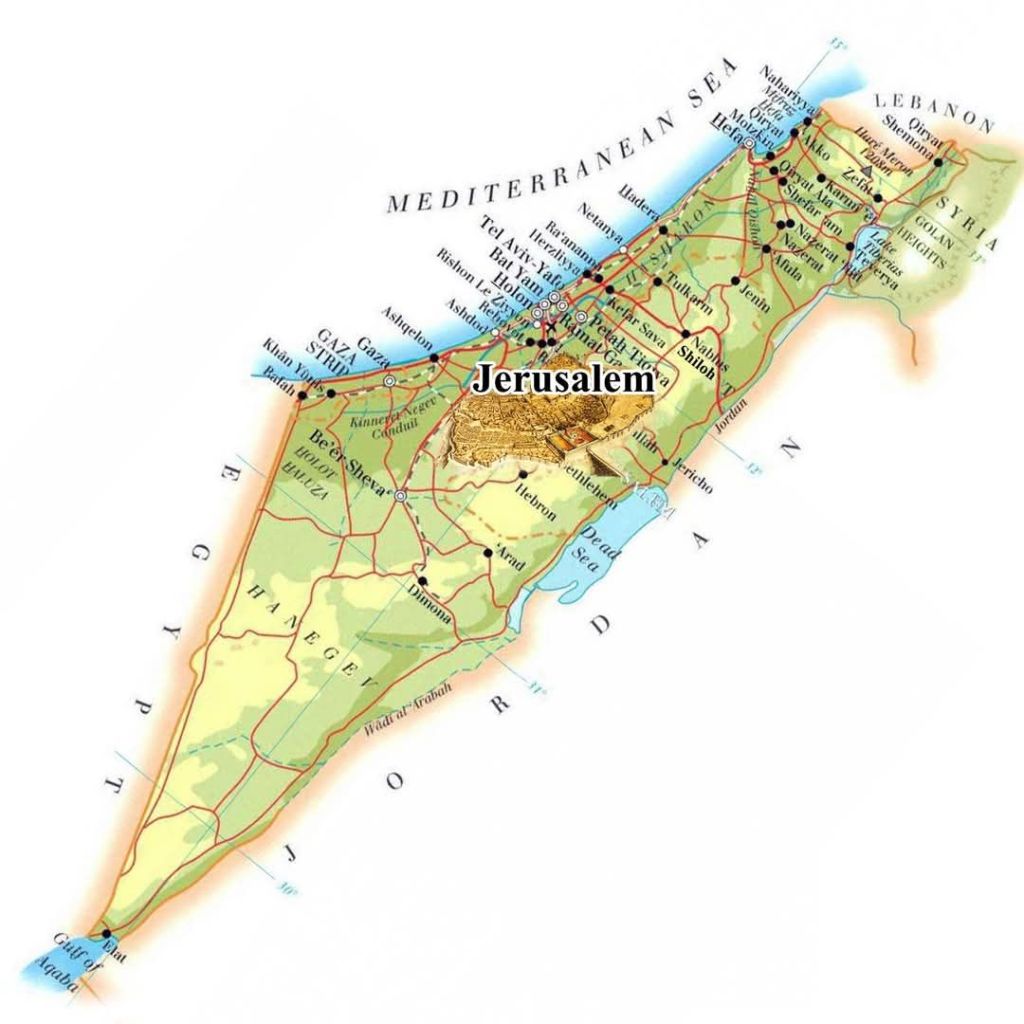
There will be a United Israel and No foreign Nation have the right and possibility to create a State for so called „Palestines“ on the ground of Israel.
„Palestine“ never exists, is having no own language‘, no songs who are praising G-d. So we Jews are the rightfull owner of Israel.
This also is stated in the Holy Book of all Muslims.
Israel is the Land of G-d, IT IS HIS property and for this everything will be comes like Hashem wish. No foreign G-d will rule Israel ever. But all Jews are in the duty to come closer to Hashem.
 Words and Passion